
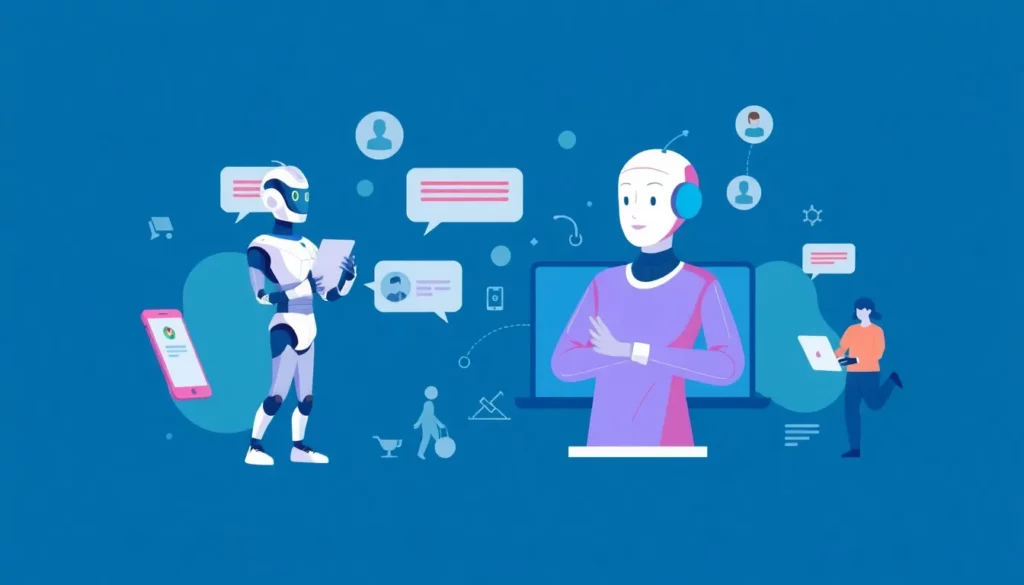
The rapid growth of artificial intelligence (AI) is reshaping how businesses handle routine tasks, especially when it comes to customer communication. Not long ago, the idea of AI-driven client interactions might have seemed unrealistic. Today, AI chatbots and virtual assistants outperform sales teams in terms of speed, efficiency, and consistency. What makes AI so powerful in customer communication, and why are traditional methods losing ground? Let’s explore.
The Human Factor: Emotions, Fatigue, and Limited Focus
Sales teams are subject to human limitations: mood changes, fatigue, and mental stress can all influence how well they communicate with customers. As the workday goes on, even the most driven employees might experience decreased enthusiasm or focus.
Motivation also plays a significant role. If employees feel unsupported or undercompensated, they might not give each interaction the extra effort that sets excellent service apart. As a result, lead processing slows, conversion rates dip, and customer acquisition costs rise.
According to McKinsey, customer experience in B2B sales has three times the impact on purchasing decisions than companies often estimate.
Skills and Knowledge Gaps
Sales professionals rely heavily on scripts and pre-set responses, especially when facing customer objections. But while scripts can help, they’re no substitute for the adaptability of AI. Unlike humans, AI can instantly pull relevant data from customer relationship management (CRM) systems and corporate databases, delivering accurate, personalized responses within seconds.
Product expertise is another challenge. Recruiting sales staff with both technical knowledge and sales skills is costly and time-consuming, especially for companies needing multilingual capabilities. With its ability to switch languages seamlessly, AI can address inquiries from a global audience, bypassing training costs and language barriers.
The Problem of Human Error
Customer interactions don’t end with a conversation. After each exchange, it’s critical to update records, follow up, and log important details in the CRM. However, many sales professionals skip these follow-up tasks, prioritizing “hot leads” and neglecting “warm” or “cold” prospects who could convert later.
AI eliminates this issue by automatically capturing every detail, instantly updating the CRM, and ensuring clients receive timely follow-ups, summaries, and relevant materials after each interaction.
Employer Challenges: Team Management and Costs
Managing a human sales team comes with challenges: turnover, training, and managing absences due to illness or vacation. Salaries for sales teams can represent 30% to 60% of customer acquisition costs (CAC) in B2B firms, and even more for smaller companies relying on human-centric approaches.
By integrating AI into customer service, companies can mitigate these costs and reduce risks related to turnover or unexpected absences.
The Customer’s Perspective: Pressure-Free Interaction
Many customers find interaction with salespeople stressful, whether due to concerns about “bothering” them or worries about facing aggressive sales tactics. This is particularly true for introverts or those preferring a self-guided purchasing process.
Gartner reports that 44% of customers now prefer to make purchases without a salesperson’s involvement. AI-powered chatbots and virtual assistants provide a solution, offering customers a pressure-free, on-demand interaction option that’s especially valuable for those ready to buy.
How AI Elevates Customer Interactions
1. 24/7 Availability and Scalability: AI chatbots are always available, providing multilingual support at any time of day. This constant availability ensures customers never have to wait.
2. Enhanced Engagement and Personalization: AI can analyze customer data in real time, identifying optimal responses and guiding customers through their journey. AI tailors interactions, ensuring a seamless experience for every customer.
3. CRM Integration and Deep Insights: AI-driven CRM integration allows for the automation of sales and marketing processes, ensuring that data is leveraged to personalize customer interactions and improve decision-making at every touchpoint.
According to Forrester, by 2025, 85% of customer interactions are expected to occur without human involvement.
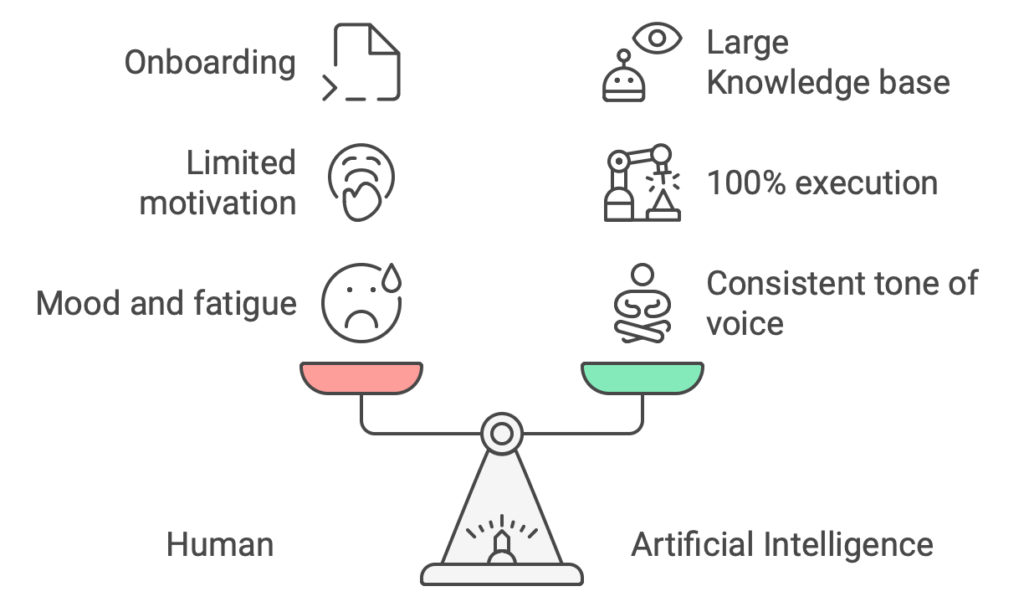
Human vs. AI in Customer Communication
AI doesn’t replace the need for human skills but complements them by handling repetitive tasks and allowing sales teams to focus on high-value interactions. Strategically implemented, AI boosts team productivity and enhances the customer journey.
Conclusion: Embracing Automation for Competitive Advantage
Companies that thrive in the coming years will be those that leverage AI to manage repetitive tasks, freeing their human teams for strategic initiatives. Automation, combined with human talent, offers a path to increased efficiency and customer satisfaction.
Visit Go2Market Solutions to learn more about our AI-driven solutions for sales and marketing.
Follow us on social media: